

Harsha Vardhan Bhashavathini. BTech. (IT). MSc . (PhD). Counseling psychologist. Psycho therapist. Hyderabad .
The most dangerous wounds in human life are the ones that remain unseen. When the body is injured, the pain is visible; but when the mind is hurt, it silently folds inward.
In today’s fast-moving world, while society is racing ahead, the human mind is often falling behind. Stress, competition, financial instability, and relationship conflicts are collectively creating a silent crisis. This is not just an individual problem—it is a social, economic, and humanitarian crisis.
Mental health has now emerged as one of the most critical public health challenges worldwide. Unlike physical illnesses, its impact spreads widely and silently. Economic pressure, rapid social changes, technology-driven lifestyles, and the lack of meaningful personal connections are intensifying this mental health crisis. In this context, psychological counseling and psychotherapy have emerged globally as essential solutions.
The Global Mental Health Scenario :
According to the World Health Organization (WHO, 2023), around 970 million people worldwide—approximately 1 in every 8 individuals—are living with mental health conditions.
Among them:
Depression: 280 million people
Anxiety disorders: 301 million people
Substance use disorders (alcohol/drugs): 164 million people
These figures represent only reported cases; the actual numbers are likely much higher.
In India, according to the National Mental Health Survey (2015–16):
Around 14% of Indians experience mental health issues at some point in life
Nearly 45 million suffer from depression
Around 38 million struggle with anxiety disorders.
The most alarming reality:
Globally, 700,000 people die by suicide every year (WHO, 2023)
In India alone, about 170,000 suicides annually (NCRB, 2022)
These numbers clearly indicate that mental health is not a personal issue—it is a global collective crisis.
Sources of Stress :
If we had to describe the root cause of modern mental distress in one word, it would be “imbalance.”
Expectations are high, but opportunities are uncertain. This gap breeds frustration and hopelessness.
Social media has further complicated the situation. People see only others’ successes, not their struggles. This creates a culture of comparison:
“If they can achieve so much, why can’t I?”
This gradually turns into: “I am not good enough.”
Another major issue is the lack of communication within families. In many households, there is still no open space to talk about emotions. Dismissing feelings as “small issues” pushes individuals—especially youth—into deeper isolation.
Unable to cope with stress, many turn to alcohol or drugs for temporary relief. This becomes a dangerous cycle:
First, it provides relief
Then, it leads to dependency
Ultimately, it worsens the problem .
Counseling: A Scientific Solution :
Counseling is not just “talking”—it is a scientifically validated therapeutic process.
Our thoughts, emotions, and behaviors are deeply interconnected. The way a person thinks shapes how they feel, and those feelings influence their actions.
Counseling works by identifying and reshaping negative thought patterns. For example:
“I have failed” can be reframed as
“This is a learning experience.”
Such small shifts can transform the direction of a person’s life.
Approaches like Cognitive Behavioral Therapy (CBT) play a crucial role in this process. Research shows that 70–80% of individuals experience significant improvement through counseling.
These changes are not just emotional—they are also reflected in brain functioning.
However, a major barrier still exists in society: stigma. Many people believe that visiting a psychologist is a sign of weakness or damages their social image. This mindset needs to change.
Mental health conditions are like any other health issues—they are treatable, and solutions exist.
Not Just Governments—Society Must Act :
Governments worldwide are increasingly focusing on mental health, but a significant gap remains.
In low-income countries, over 75% of people do not receive proper treatment. In India, the shortage of mental health professionals is a serious concern.
To address this crisis:
Parents must learn to communicate openly with children
Educational institutions should provide counseling services
Young people must feel safe expressing their emotions
Most importantly, society must understand:
“Seeking help is not a weakness—it is a strength.”
Conclusion :
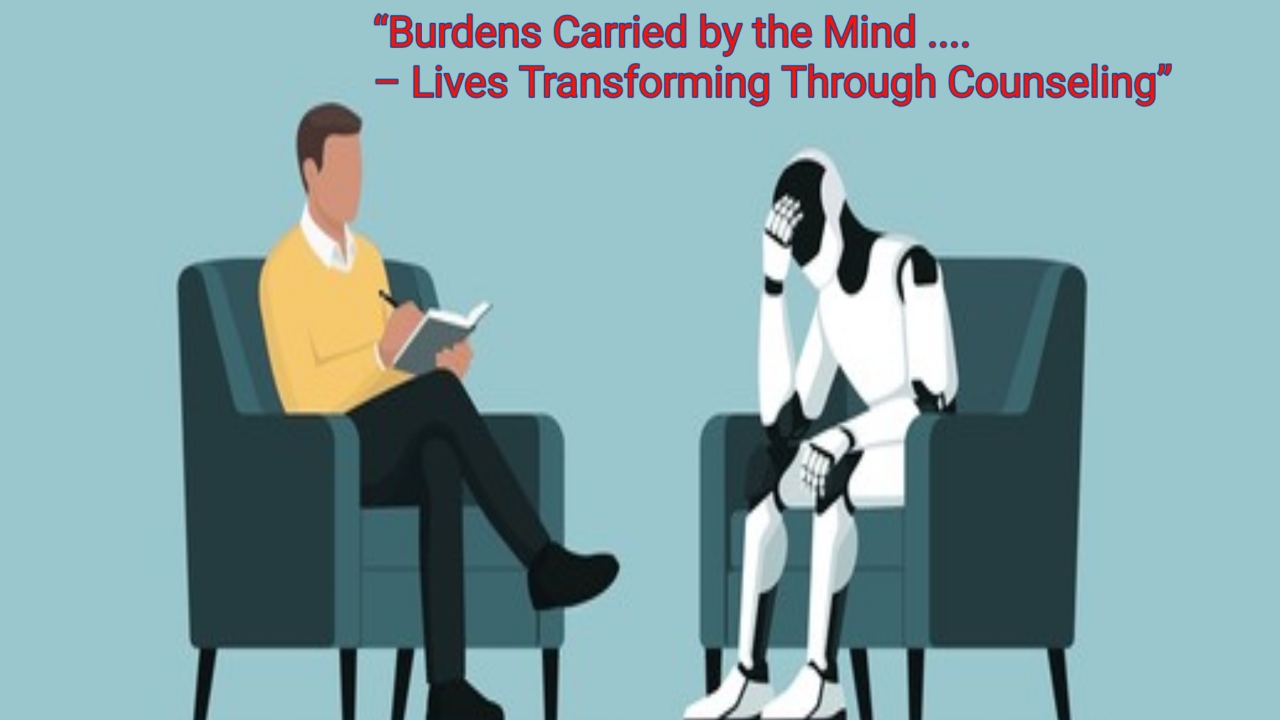
The burdens carried by the mind are invisible—but they slowly break a person from within.
The only way to reduce this burden is through understanding. Counseling is that process of understanding.
When one person seeks counseling, it doesn’t just change their life—it influences their family and, ultimately, society.
One fundamental truth remains:
Human strength lies not in suppressing pain, but in seeking help.
If we protect the mind, we protect humanity.
Only by embracing counseling can we build a healthier society.