

Dr. keshavulu Bashavathini. MD. psy. Osm.
Loneliness is not classified as a mental disorder in diagnostic manuals. However, modern psychiatric science clearly identifies it as a major risk factor for multiple mental and physical health conditions.
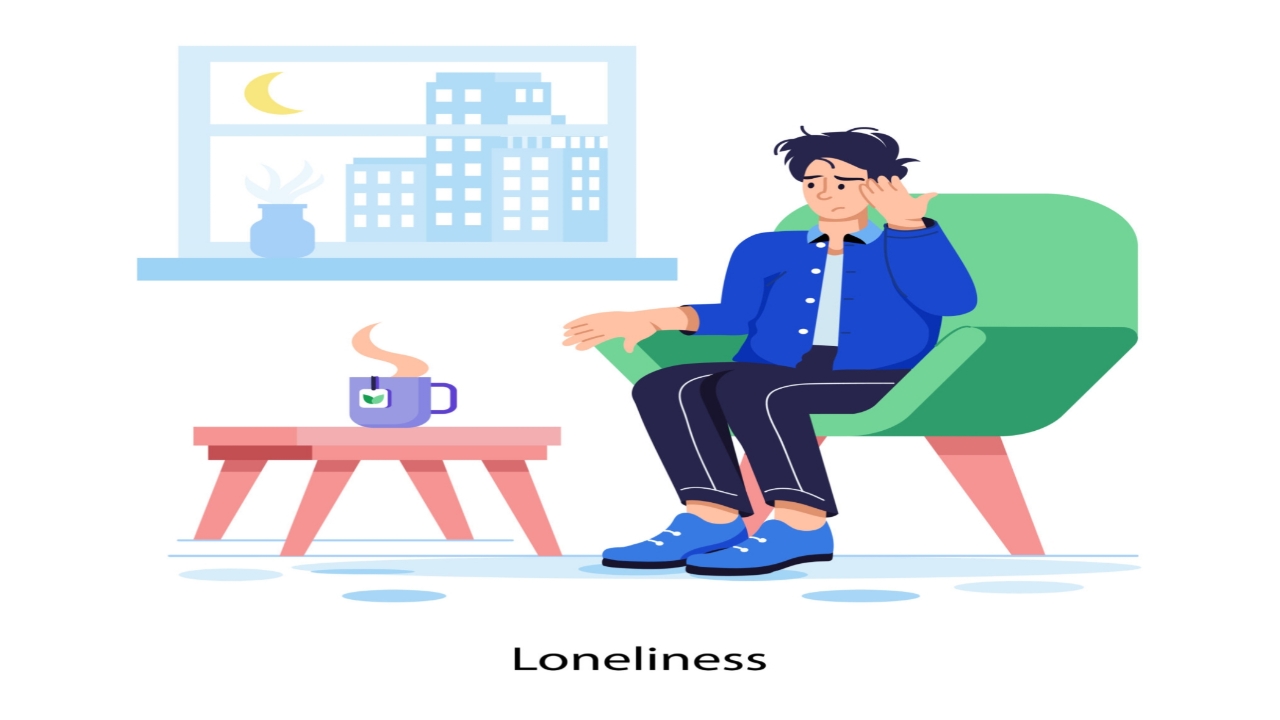
Loneliness does not simply mean being alone. It refers to a state where emotional connection is absent, even when social relationships formally exist.
Scientific definition:
Subjective Social Isolation – the perceived gap between desired and actual emotional/social connection
This condition significantly increases the risk of depression, anxiety, insomnia, substance use disorders, and suicidal behavior.
According to the World Health Organization:
Loneliness is a significant determinant of mental and physical health, comparable to smoking and obesity.
Loneliness → Mental Disorders: The Cause–Effect Pathway
Scientific Causal Model:
Loneliness
→ Chronic psychological stress
→ Sustained elevation of cortisol
→ Reduced serotonin & dopamine activity in the brain
→ Depression, anxiety, reduced self-esteem.
The Lancet Psychiatry (2022): Severe loneliness increases, Depression risk by 2.3 times, Suicidal ideation by nearly 3 times.
India (ICMR–NIMHANS studies):
36–40% of urban youth show clinically significant loneliness symptoms,
3Suicide and Loneliness – The Hidden Link
Analysis of recent suicide cases reveals a consistent and alarming pattern:
Loneliness + Lack of emotional support = High suicide risk.
National Crime Records Bureau (India) – Analytical Findings:
Among suicide victims:
Over 60% had disrupted family or social relationships
45% reported feelings equivalent to “no one to talk to”
Loneliness is rising even among married individuals, challenging traditional assumptions.
Psychological Autopsy Studies conclude:
Most suicides are not caused by mental illness alone, but by untreated loneliness combined with life stressors.
Is This a Failure of Mental Health Professionals?
– A Systemic Analysis
This is not an individual clinician’s failure, but a system-level gap.
Current shortcomings, Loneliness is rarely screened as an independent clinical factor, OPD consultations limited to 5–7 minutes, making social assessment difficult, Public mental health programs focus on disorders, not social-emotional determinants.
India Mental Health Atlas (2023):
Per 100,000 population: Psychiatrists: ~0.75 only,
Psychologists & social workers: even fewer. Resulting Loneliness remains undetected until it manifests as major depression or suicidal behavior.
Solutions – Scientific and Social Interventions :
A) Clinical Level
Routine use of UCLA Loneliness Scale in OPD settings
Combining medication with Group Therapy and Family Therapy
Recognizing loneliness as a treatment-modifying factor.
B) Community Level
Social connection centers for elderly and youth
Emotional literacy programs in schools and colleges.
C) Policy Level
Recognition of loneliness as a Public Mental Health Indicator
Deployment of Community Mental Health Workers through local governments.
Conclusion :
– A Public Health Warning
Loneliness is invisible… but it kills.
It may not be a disease by definition, but it is a silent gateway to multiple mental disorders.
Failure to recognize loneliness is not the fault of the individual—
it is a collective responsibility of society and systems.
Mental health needs more than medicines.
It needs people, connection, and belonging.